
A Newcomer Health Plan for Ontario – the time is right
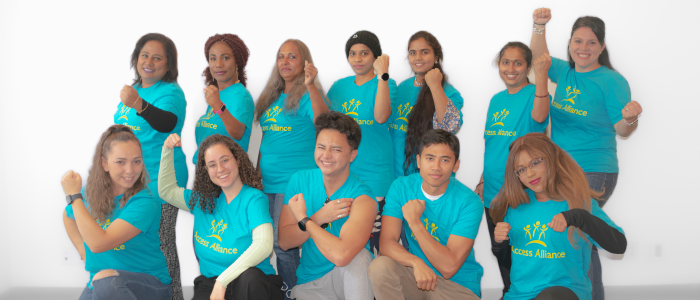
It is time to design, validate, and evaluate an equity-focused Newcomer Health Plan (NHP) in Ontario.
Why a Newcomer Health Plan?
Approximately 250,000 people immigrate to Canada annually, contributing to about two-thirds of the country’s annual population growth (1); and almost half of all new Canadians settled in Ontario in 2025 (2). Upon arrival, they discover a public‑health system that is not built with them in mind. Newcomer communities face persistent barriers to healthcare access: language exclusion, fragmented navigation, limited culturally safe services, racism, and systemic discrimination (3,4,5,6,7,8,9,10,11,12,13). The COVID-19 pandemic amplified these inequities. While immigrants comprise 30% of Ontario’s population (14), they were disproportionately affected by COVID-19 due to social and structural determinants of health, including precarious employment, crowded housing, mistrust of health institutions, and their lack of consideration in health promotion and literacy efforts (3,4,5,6,7,8,10,11,12,13).
While newcomer concerns are included within some broader targeted health plans (e.g., the Black Health Plan (15)), there is no newcomer-focused strategic approach in Ontario Health’s Equity, Diversity, Inclusion, and Anti-Racism framework (16). Lacking a provincial mechanism to coordinate equity-centred public health planning for newcomers, or to embed newcomer-specific, culturally responsive practices across sectors, magnifies structural inequities.
In practice, newcomers show up as parts of other plans, without being fully represented. The result is a piecemeal public health system response to well-documented needs for newcomer health access.
Recent research builds on and echoes decades of prior research findings, recommendations, and solutions (3,4,5,6,7,8,10,11,12,13), indicating that a different approach, which centres newcomers, is needed. We propose using a community-based implementation science approach to co-design and validate an Ontario Newcomer Health Plan (NHP), a sustainable, scalable governance and systems-level intervention that targets structural leverage points within the health system. That’s public health, primary care, community care, and individual health. Our work includes Municipal Public Health Units, Public Health Ontario, Community Health Centres, Primary Care teams, Solo Practitioners, and community-based organizations such as settlement agencies and ethnocultural groups that provide essential health-related orientation and outreach, trust-building, and preventive care.
What is the Newcomer Health Plan?
The NHP will involve policy and program interventions, workforce and service delivery models, and governance frameworks. It will strengthen prevention, health promotion, equity-focused outreach, and system navigation through improved access, cultural safety, accessible language, including translation, and coordinated pathways linking newcomers to public health services and health-adjacent social supports. The plan will integrate trauma-informed, culturally tailored strategies and address governance and workforce barriers.
This is a provincial-scale effort to test an evidence-informed, community-governed NHP for integration into Ontario’s public health system. It builds governance structures, accountability tools, and cross-sector service integration that embed newcomer needs into public health planning. Methodologically novel in its use of co-led research governance, applied systems design, and community-engaged evaluation, it draws on lessons from the Black Health Plan while advancing scalability and provincial adoption.
Why it matters
By co-designing, validating, and creating a scalable system-level model rooted in community governance and cross-sector collaboration, this project strengthens health system resilience by integrating culturally safe, accountable, and newcomer-responsive models of care at the structural level. Its focus on building feedback loops, training infrastructure, and aligning policies with Ontario Health ensures not only service improvement but also system transformation that endures beyond the project period. Outcomes directly advance population health and health equity by providing not only publicly visible access to care but also structural system elements such as responsiveness, trust, accountability, and uptake, all of which are foundational to resilient and equitable health systems.
The NHP provides a coordinated, equity-centred approach rooted in community governance and cross-sector collaboration. Through feedback loops, training, and policy alignment, it supports immediate service improvement and lasting system transformation, enhancing access, trust, accountability, and uptake. By the end of the project, a newcomer arriving in Ontario will discover a health system that is being built with them in mind.
Knowledge products will include policy briefs, webinars, peer-reviewed publications, and community toolkits. A targeted knowledge mobilization strategy will link government bodies (e.g., Ontario Health, Toronto Public Health), settlement agencies, and newcomer networks to ensure timely uptake and influence on provincial health equity strategies.
What’s next?
We have submitted a 3-year project proposal to the Canadian Institutes of Health Research (CIHR). Our proposal to CIHR focuses on the public health system, as required by the funding eligibility criteria. But a Newcomer Health Plan (NHP) is much broader in scope. For example, Ontario’s Primary Care Attachment Plan is focused on connecting every Ontarian to a primary care provider. Attachment is merely the tip of the iceberg of health care.
The experience of receiving service needs to be consistent, no matter where newcomers interact and intersect with the health system. An overarching plan can help achieve that. At its most basic, the NHP creates a consistent service framework and roadmap. At its most complex, it mandates health equity and a safe and equitable service experience.
Even with a strong proposal and an even stronger group of partners, there is no guarantee that we will receive funding. We won’t hear until at least May. We have decided not to wait and will start the process now.
In early April we’ll convene an information and working session to work towards true health equity and inclusion for newcomers in Ontario. More details coming soon.
Newcomer Health Plan – convening session on April 29th
On April 29th, we convened a group of people who work and live at the intersection of health, settlement, equity, and inclusion to discuss what a Newcomer Health Plan might look like. You can read the pre-session orientation document, which includes a summary of each panel, presenter bios, as well as our breakout room discussion questions.
Key themes from panel presentations
Our panel presentations highlighted a critical shift from viewing newcomer health as a series of isolated projects to treating it as a coordinated social movement aimed at systemic transformation.
Here are some key themes from each panel, which outline the what (Panel 1) and the how (Panel 2) of the Newcomer Health Plan (NHP):
- From object to subject of policy: A central theme was the need for a shift in perspective where newcomers are no longer treated as the “objects” of public health policy but are recognized as active subjects and agents of change with lived experience that must inform system design.
- The settlement-health link: Presentations stressed that health is a settlement issue, and settlement is a health agenda. This means that Social Determinants of Health (SDOH), such as language barriers, housing, and employment are not external to health but are fundamental determinants that require cross-sector integration.
- We can and should scale local innovations province wide: Many successful models exist at the community level (e.g., patient navigators, mobile clinics), but they are often fragmented, geographically bound, or time-limited by grants. The goal is to move what works from local or time-bound pilots to standardized practice across the province.
- True co-ownership and governance: Moving beyond token seats at the table, panelists advocated for shared governance, where community members and community-based organizations have decision-making power over budgets, operations, and data sovereignty.
- Asset-Based Community Development (ABCD): Instead of focusing solely on deficits or the need to fix newcomers, a Newcomer Health Plan must follow an ABCD model, which involves respecting the existing resources and resilience within newcomer communities and building upon them rather than reinventing the wheel, or asking newcomers the same questions time and time again.
Watch each panel for more insights and reflections.
Panel 1: Evidence for Change – The Case for a Newcomer Health Plan
Panel 2: From Consultation to Co-Ownership – Principles of Equitable Co-Creation
You can view/download Saleema Allana’s presentation slides here.
Summary of breakout discussions
After our panels we broke into breakout groups to discuss a few questions and bring the experience, insight, and energy of our participants into our process. This document provides an overview of themes from our breakout discussion rooms.
Continuing to make the case
This presentation shared findings from the Compounding COVID and knowledge mobilization project, which, in part, led to the idea for a Newcomer Health Plan. A key feature of this work was its strong community engagement approach. Through two multi-stakeholder think tank sessions, individuals with lived experience, service providers, policymakers, and researchers collaboratively interpreted findings and identified actionable strategies to address inequities. In partnership with Access Alliance, findings were actively disseminated through community-based channels, ensuring relevance to policy and practice. This presentation highlights how community voices shaped the research and informed practical solutions for more equitable health systems.
References
- Statistics Canada. Immigrants make up the largest share of the population in over 150 years and continue to shape who we are as Canadians. (2022) https://www150.statcan.gc.ca/n1/daily-quotidien/221026/dq221026a-eng.htm
- Ontario Ministry of Finance. (2026). Ontario Demographic Quarterly: Highlights of third quarter. Government of Ontario. https://www.ontario.ca/page/ontario-demographic-quarterly-highlights-third-quarter#secti on-2
- Vahabi M, Matai L, Lofters A, Rayner J, Damba C, Janczur A, Kopp A, Fung K, Narushima M, Hawa R Datta G, Tharao W, Wong JP. Silent Voices of Immigrants and Refugees Battling with Mental Health and Addiction during COVID-19: A Follow- Up Population-Based Cohort Retrospective Study in Ontario, Canada. Journal of Environmental Science and Public Health. 8 (2024). https://accessalliance.ca/wp-content/uploads/2025/03/Silent-Voices-of-Immigrants-and-Refugees-Battling-with-Mental-Health-and-Addiction-during-COVID-19-A-Follow-Up-Population-Based-Cohort-Retros.pdf
- Vahabi M, Matai L, Damba C, Kopp A, Wong J, Rayner J, Narushima M, Tharao W, Hawa R, Janczur A, Datta G, Fung K, Lofters A. The impact of COVID-19 on Immigrants and Refugees living with Cancer: A Population-Based Cohort Study in Ontario, Canada. Journal of Environmental Science and Public Health. 8 (2024): 116-132. https://www.fortunejournals.com/articles/the-impact-of-covid19-on-immigrants-and-refugees-living-with-cancer-a-populationbased-cohort-study-in-ontario-canada.html
- Vahabi, M.; Devotta, K.; Ledwos, C.; Wong, J.P.; Narushima, M.; Rayner, J.; Hawa, R.; Fung, K.; Datta, G.D.; Janczur, A.; et al. Navigating Equitable Access to Cancer and Mental Health Services During Pandemics: Stakeholder Perspectives on COVID-19 Challenges and Community-Based Solutions for Immigrants and Refugees—Proceedings from Think Tank Sessions. Healthcare 2025, 13, 564. https://doi.org/10.3390/healthcare13050564
- Lou NM, Noels KA, Zhang YS, Kurl S. Ethnic minority, immigrants, and Indigenous people’s well-being disparities in Canada during the COVID-19 pandemic: The mediating role of threat perceptions. International Journal of Intercultural Relations. 2022 May 1;88:148-56. https://doi.org/10.1016/j.ijintrel.2022.04.006
- Council of Agencies Serving South Asians (CASSA), Roots Community Services (RootsCS), Hispanic Development Council (HDC), Chinese Canadian National Council – Toronto Chapter (CCNCTO), & Canadian Arab Institute (CAI). (2024). 2024-CASSA Health Equity Summit: Proceedings report. https://www.cassa.ca/wp-content/uploads/2025/02/2024-Summit-Proceedings-Report.pdf
- Council of Agencies Serving South Asians (CASSA), Roots Community Services (RootsCS), Hispanic Development Council (HDC), Chinese Canadian National Council – Toronto Chapter (CCNCTO), & Canadian Arab Institute (CAI). (2024) Bridging health divides: A collaborative study on addressing healthcare disparities in racialized communities. https://www.cassa.ca/wp-content/uploads/2025/04/Bridging-Health-Divides-A-Collaborative-Study-on-Addressing-Healthcare-Disparities-in-Racialized-Communities.pdf
- Toronto Public Health and Access Alliance Multicultural Health and Community Services. The Global City: Newcomer Health in Toronto. November 2011. https://accessalliance.ca/wp-content/uploads//2018/06/GlobalCity-Final.pdf
- Niles C, Yoshida K, Vickers K, Anderson J, El-Lahib Y, Hamdy R, Al Awamry N. Untold Stories of Black and Racialized Immigrants with Disabilities During COVID-19 in the Greater Toronto and Hamilton Area. Healthcare. 2026; 14(2):205. https://doi.org/10.3390/healthcare14020205
- Jackson C, Mondal S, Di Ruggiero E, Gautier L. Building Responsive Intersectoral Initiatives for Newcomers in Toronto: Learning from Service Providers’ Experiences in the Context of COVID-19. Annals of Global Health. 2025; 91(1): 3, 1–15. DOI: https://doi.org/10.5334/aogh.4583
- Alamgir Akm, Yahia M, Pradhan SM, Janczur A. Healthcare Service Needs for Refugees, Asylum Seekers and Residents with Precarious Immigration Status in Canada: A Scoping Review. J Scie Res Reports, 2025;31(1):117-144. https://doi.org/10.9734/jsrr/2025/v31i12752
- Alamgir Akm, Kong C. Implementation Research with Expressive Arts Therapy (EAT) to Support the Newcomer Survivors of Gender-based Domestic Violence (GBDV) in Toronto. Proceedings of the 7th International Conference on Gender Research, 2024;7(1):19-26. DOI: https://doi.org/10.34190/icgr.7.1.2265
- Statistics Canada. Focus on Geography Series, 2021 Census of Population – Ontario, Province. (2025). https://www12.statcan.gc.ca/census-recensement/2021/as-sa/fogs-spg/Page.cfm?lang=e& topic=9&dguid=2021A000235
- A Black Health Plan for Ontario. Ontario Health. https://www.ontariohealth.ca/system/equity/black-health-plan
- Equity, Inclusion, Diversity and Anti-Racism Framework. Ontario Health. https://www.ontariohealth.ca/system/equity/framework