
Advancing health equity, strengthening attachment readiness, and improving mental health outcomes for Black children and youth
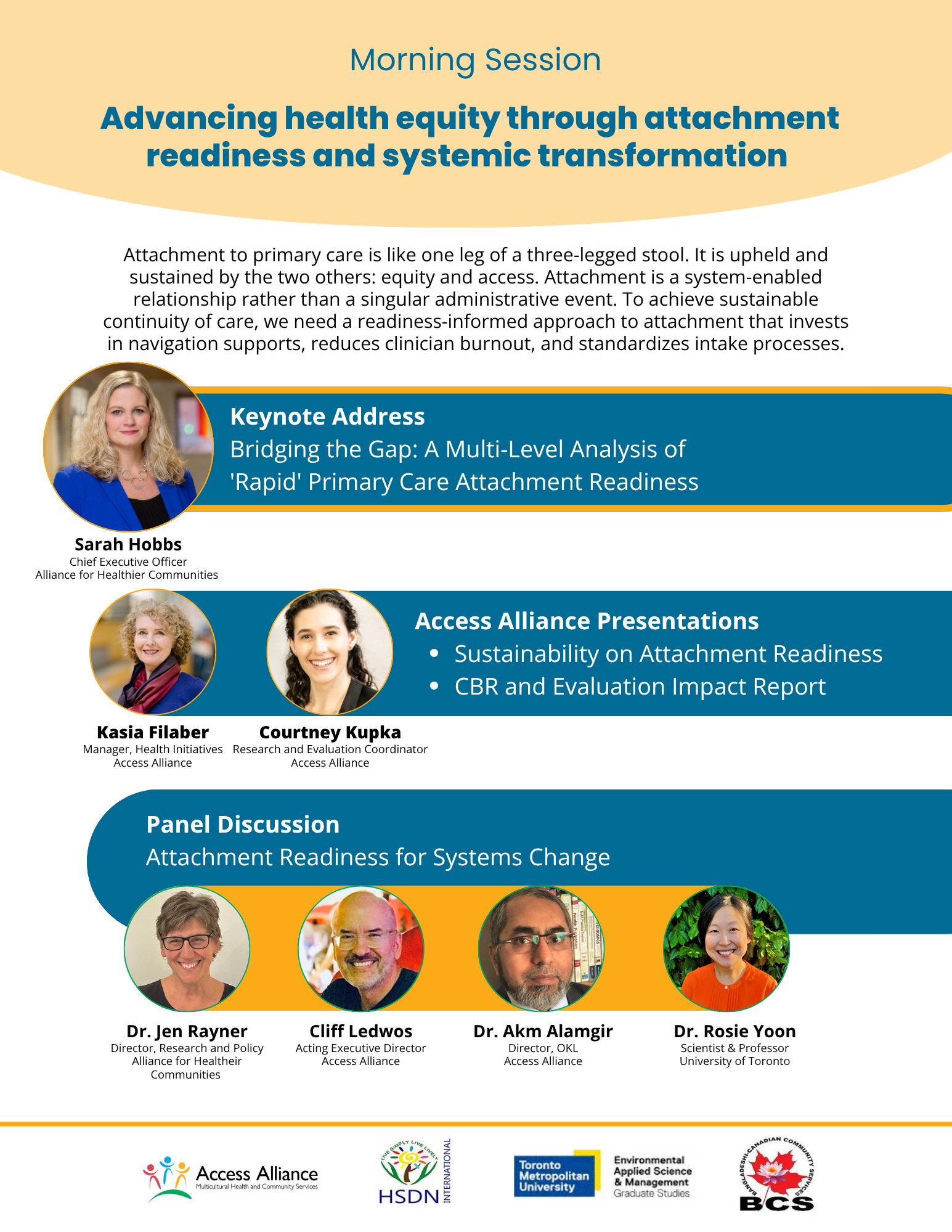
Advancing health equity through attachment readiness and systemic transformation
Access Alliance’s annual Community-Based Research Retreat Day in 2026 focused on advancing health equity, strengthening attachment readiness and systems of care, and improving mental health outcomes for Black children and youth community members.
In the morning, we focused on advancing health equity through attachment readiness and systemic transformation. Attachment to primary care is like one leg of a three-legged stool. It is upheld and sustained by the two others: equity and access. Attachment is a system-enabled relationship rather than a singular administrative event. To achieve sustainable continuity of care, we need a readiness-informed approach to attachment that invests in navigation supports, reduces clinician burnout, and standardizes intake processes.
Specifically we:
- discussed attachment readiness in the context of health equity frameworks and access in community health centres.
- outlined the influences for attachment readiness (e.g. trust, treatment, engagement, responsiveness, etc.).
- explored pathways and roles of Community Health Centres in supporting increasing attachment to primary care.
We also provided an overview of our community-based research efforts and impact over the past year.
Empowering Black children and youth by centering attachment and equity in mental health systems of care
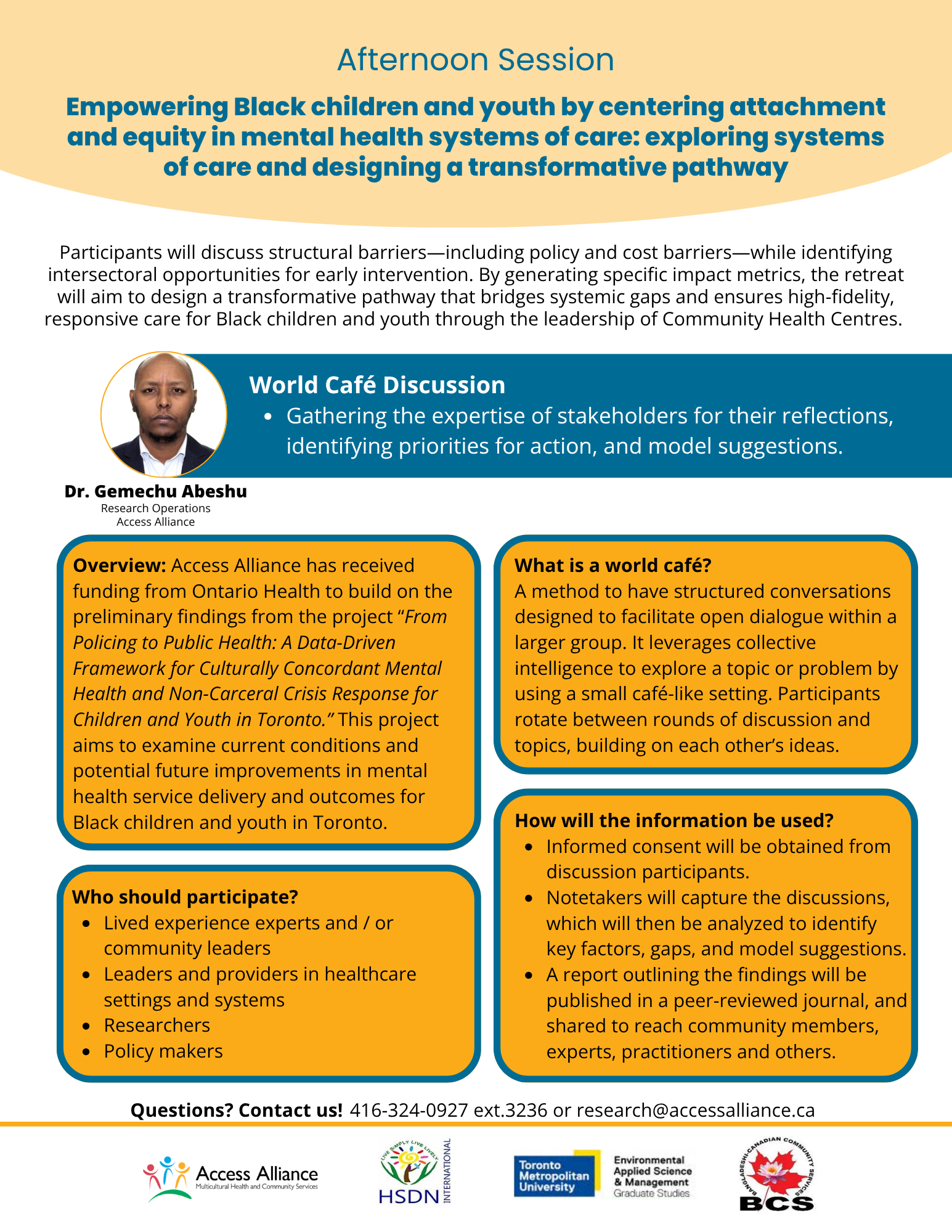
In the afternoon, we focused on empowering Black children and youth by centering attachment and equity in mental health systems of care: exploring systems of care and designing a transformative pathway. In a highly interactive World Cafe session, participants discussed structural barriers—including policy and cost barriers—while identifying intersectoral opportunities for early intervention.
Specifically, we:
- identified and built understanding of the current status in the light of temporal and structural barriers that impact or influence Black children and youth access to mental health resources. (e.g. policy, practices, costs, etc.).
- identified points of intersectoral connection to understand opportunities for early intervention, connection and access.
- discussed what success looks like.
Presentation videos
Sarah Hobbs, Chief Executive Officer, Alliance for Healthier Communities provided our keynote address in the morning – Bridging the Gap: A Multi-Level Analysis of ‘Rapid’ Primary Care Attachment Readiness.
Kasia Filaber, Manager, Health Initiatives, Access Alliance, provided an overview of our recent research exploring the need to rethink primary care attachment as a relational and system-supported process.
Courtney Kupka, Access Alliance’s Research and Evaluation Coordinator, provided an overview of our research and evaluation efforts and impact over the past year. She focused on how we work to turn community knowledge into healthier, fairer systems for immigrants and refugees.
In our morning panel discussion, participants reflected on the previous keynote and attachment readiness presentations, and what they mean for healthcare systems change. On the panel:
- Dr. Jen Rayner, Director, Research and Policy, Alliance for Healtheir Communities
- Cliff Ledwos, Acting Executive Director, Access Alliance
- Dr. Akm Alamgir, Director, Organizational Knowledge and Learning, Access Alliance
- Dr. Rosie Yoon, Scientist & Professor, University of Toronto
Dr. Gemechu Abeshu, Access Alliance Research Operations Lead, provided preliminary findings from the project “From Policing to Public Health: A Data-Driven Framework for Culturally Concordant Mental Health and Non-Carceral Crisis Response for Children and Youth in Toronto.” This project
aims to examine current conditions and potential future improvements in mental health service delivery and outcomes for Black children and youth in Toronto.
His presentation led into a World Café Discussion, where we gathered the expertise of stakeholders for their reflections, identifying priorities for action, and model suggestions. A summary of that event will be shared in the near future.
Related Access Alliance activities
2026 Annual Research Impact Report of the Community-Based Research (CBR) and Evaluation Department at Access Alliance
The 2026 Annual Research Impact Report of the Community-Based Research (CBR) and Evaluation Department at Access Alliance presents a compilation of our team’s scholarly contributions, methodological advancements, and initiatives from April 2025 to March 2026. We invite you to engage critically with our report, reflecting a continuing commitment to support a more equitable, inclusive, and evidence-informed public health landscape in Toronto and beyond.
From Policing to Public Health: A Data-Driven Framework for Culturally Concordant Mental Health and Non-Carceral Crisis Response for children and youth in Toronto
This initiative seeks to better understand the current assets, needs, and concerns of ACB children and youth in Ontario. The project aims to develop evidence-based recommendations for culturally responsive and community-anchored mental health care models that can improve the well-being and quality of life of Black children and youth.