
Validating our Community Health Needs Assessment with the community
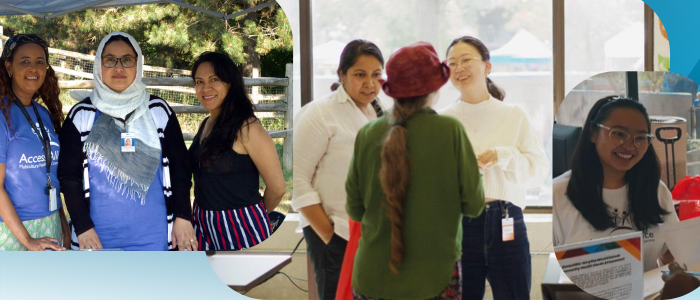
Over the past year, Access Alliance implemented a Community Health Needs Assessment (CHNA) survey with the Rockcliffe-Smythe & Mount Dennis neighbourhoods. The survey covered important aspects that affect community health and well-being. Soon after publishing our CHNA report, we convened a community validation meeting to share the and gather community insights, feedback, and ideas for action steps.
The evening session brought a diverse representation of the community, from seniors to youth, young families, individual community members, and friends who came together.
Project Lead, Courtney Kupka, Access Alliance Research & Evaluation Coordinator, presented an overview of findings, and then led a discussion with community members present.
Community discussion
The discussion focused on issues of importance to participants and what changes they might want to see. We asked:
- What is the issue you want to focus on? What affects you most when it comes to this issue?
- What changes would make the biggest difference?
We discussed who has the power to make changes? Who are your potential allies/partners?
We then ask about action(s) community members were interested in taking. We asked:
- What do you want to do about it?
Primary issues and areas of focus
Community members identified several pressing concerns that impact their daily lives, with a strong emphasis on social connection and basic needs:
- Social isolation and lack of programming: A dominant theme across all groups was the need for more gatherings, especially for seniors. Residents expressed a desire for exercise classes (2–3 times a week), community dining to reduce the burden of cooking, dancing, karaoke, and organized trips both inside and outside of Toronto.
- Accessibility and infrastructure: Physical barriers were a concern, specifically the lack of buttons in elevators and the need for better steps and more accessible transit.
- Economic pressures: High transportation costs (TTC/PRESTO) were cited by every group as a barrier to participation. Participants highlighted the need for more housing support for youth and newcomers, lower housing costs, and the establishment of more food banks.
- Service Gaps: Groups noted a lack of local doctors and a need for expanded mental health services, daycare, and tutoring for youth.
Changes that would make the biggest difference
Residents identified specific changes that would improve their quality of life:
- Expanded activities and education: Participants called for more diverse programming, including ESL and language classes, digital literacy, and workshops on AI and technology.
- Improved communication: Participants suggested more frequent use of newsletters, email blasts, and QR codes for information sharing, to keep the community updated.
- Mental health and solidarity: Reducing stress through social connection was seen as an important change to improve mental health. Participants also suggested holding more regular community social events and meetings (annual or seasonal) to share opinions and build solidarity.
Power, allies, and partners
- Key power holders: The most frequently cited figures were Mayor Olivia Chow, Premier Doug Ford, city councillors, and “higher-ups” in the government. Overall, community members are not sure where to advocate and how.
- Allies and partners: Access Alliance was identified as a primary ally, along with the United Way (as a funder and ally).
- Perception of power: Some groups expressed frustration regarding their own influence. Notably, some seniors expressed that they do not feel they have power or are listened to, despite their contributions as long-time taxpayers.
Actions and next steps
The groups proposed several concrete actions to move from discussion to impact:
- Advocacy and influence: Actions included writing letters to the Mayor, mailing councillors. Participants are particularly interested in identifying who specifically has the power to address their issues to learn how best to influence them.
- Using data: One group suggested using CHNA data to show need, which could help secure space in the community for classes that keep seniors independent and well.
- Community-led initiatives: Participants expressed interest in gathering together to learn how to take action effectively. Proposed projects included advocating for more outdoor community and sports areas and creating social skill workshops among different community organizations.
Related Access Alliance activities
A sense of belonging – 2026 Community Health Needs Assessment (CHNA) for Rockcliffe-Smythe & Mount Dennis
The 2026 Community Health Needs Assessment (CHNA) evaluates the well-being, assets, and challenges of the Rockcliffe-Smythe and Mount Dennis (RS-MD) neighbourhoods in Toronto. RS-MD are vibrant, diverse neighbourhoods located at the west end of Toronto along the Humber River.