
A sense of belonging – 2026 Community Health Needs Assessment (CHNA) for Rockcliffe-Smythe & Mount Dennis

The 2026 Community Health Needs Assessment (CHNA) evaluates the well-being, assets, and challenges of the Rockcliffe-Smythe and Mount Dennis (RS-MD) neighbourhoods in Toronto. RS-MD are vibrant, diverse neighbourhoods located at the west end of Toronto along the Humber River.
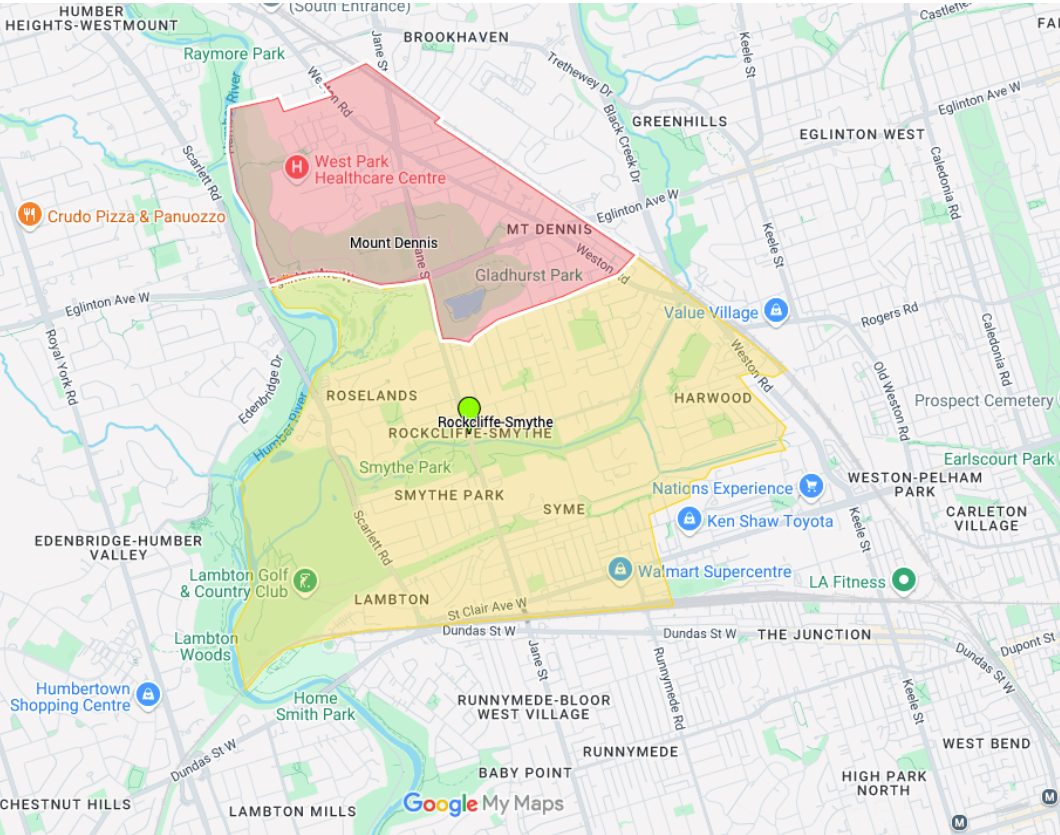
Both areas contain large immigrant populations with various housing and employment opportunities. These neighbourhoods face heightened barriers and are designated as Neighbourhood Improvement Areas (NIA) by the City of Toronto.
What is a CHNA?
A CHNA gives us, as service providers, an opportunity to engage with communities and involve community stakeholders. It also provides recommendations for different community actors.
At the individual level, a CHNA empowers communities to take action to address health disparities. At the organizational and community level, it strengthens partnerships and provides information about changing needs that influence program and service changes. This promotes sustainable initiatives that lead to improved health and well-being for all residents. At the systems and policy level, it helps to reframe policy and practice guidelines based on real evidence from grassroots community research.
What we learned
Our report highlights a strong sense of community belonging and high appreciation for accessibility of amenities such as grocery stores and malls among residents.
Our findings also reveal critical concerns regarding the rising cost of living. Affordable housing, stable employment, and food security were identified as primary stressors. Community members also identified significant gaps in healthcare accessibility, with a particularly high demand for low-cost dental and mental health services.
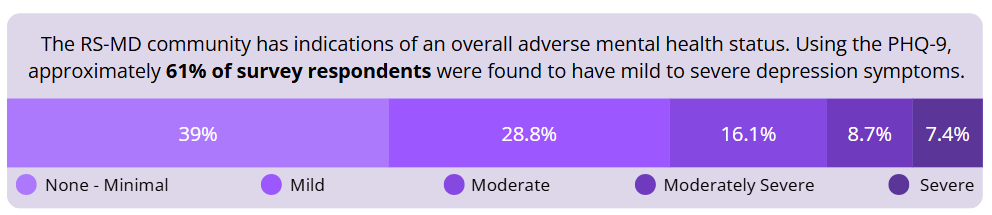
While social capital is a major strength, systemic barriers and high levels of psychological distress require more coordination among governments, and community intervention. This is evident by the majority of PHQ-9 survey respondents indicating some form of depression (61%).
Cost of living stress and challenges like housing and healthcare were identified as key drivers of poor mental health in the community. Substance use was also noted as closely linked to mental health struggles, with its presence observed throughout the local area. Help-seeking was low and residents seemed to be unsure of how to offload psychological burdens.
Main Community Assets
The most valued aspects of the RS-MD community include its accessibility, social connections, and natural features:
- Accessibility to Amenities: The greatest asset identified is the proximity to essential shops and services, such as grocery stores, schools, and community centres. This convenience is highly emphasized by residents.
- Public Transportation: Proximity to transit options like the TTC and UP train system is a significant benefit, with one in ten surveyed residents citing it as a top asset.
- Social Capital and Belonging: A strong sense of closeness, friendliness, and mutual respect among neighbours contributes significantly to positive perceptions of the area. About three out of four residents reported a strong sense of belonging. Most survey respondents reported having 1-5 close friends (60.9%) or relatives (66.5%). They described ‘closeness’ as being able to call upon someone for help or to openly talk to them with ease.
- Natural Environment: There is a high level of appreciation for local parks, greenery, and waterscapes, which residents find peaceful and quiet.
- Cultural Diversity: Focus group participants expressed appreciation for the area’s diversity, noting that connecting with others from shared or different cultural backgrounds adds to their comfort and perspective.
Main Community Concerns
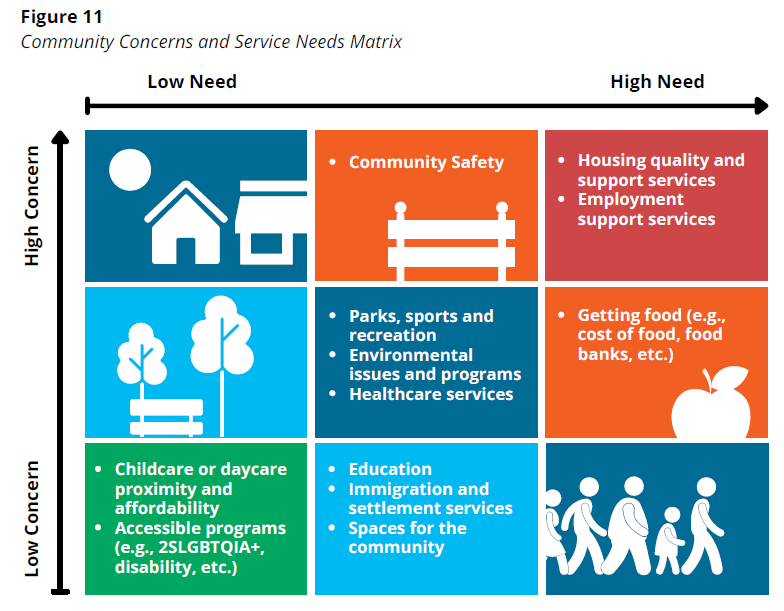
Despite these strengths, residents face several critical challenges, often related to the rising cost of living:
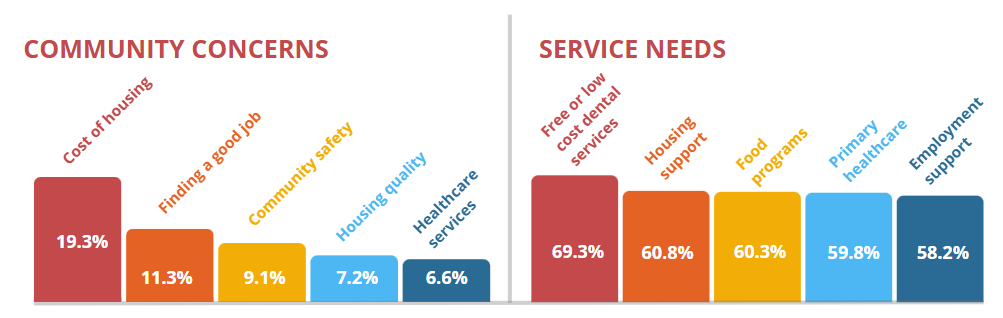
- Cost and Quality of Housing: This is the dominant concern across both neighbourhoods and all demographic groups. Residents struggle with high rents, housing quality issues, and a lack of support services. Renting is five times more common than owning a home in this community.
- Employment Opportunities: Finding a “good job” is a major worry for all ages except seniors. Many residents rely on part-time work or financial assistance, and about one in four respondents spend over an hour commuting to work. This theme was found to be closely intertwined with cost of living in RS-MD.
- Community Safety: While some view the area as peaceful, safety (including crime and policing) is ranked as a top concern, particularly in Mount Dennis. Negative social capital, such as distrust of others, is also noted.
- Healthcare Service Accessibility: Residents report that healthcare services are majorly lacking. The #1 service need expressed by respondents among all services, not just among other healthcare services, was free or low-cost dental services (69.3%). In healthcare, this was followed by a high need for primary healthcare and mental health services.
- Food Security: Getting healthy food and accessing food programs is a top priority. Approximately half of all survey respondents reported eating less at some point because they could not afford enough food.
These findings highlight a community that is socially rich and conveniently located but burdened by severe economic pressures and gaps in essential services.
Recommendations
Recommended actions include establishing centralized information hubs and expanding support programs to improve long-term health outcomes for the diverse local population, including:
Expand housing and employment services: Assistance with finding housing and employment to counter difficulties with accessibility and the rising cost of living is vital.
Fund and host local community food programs: Government bodies and local organizations not already doing so should consider supporting community members experiencing food insecurity through local food programs (e.g., food banks, meal programs, food provisions within programming).
Increase collaborations and information sharing between organizations: Local organizations should streamline referrals between them, ensuring clear communication lines to supply timely and accessible care for community members.
Invest in community safety strategies and advocacy efforts: Creating opportunities for community members to connect with each other, including programs to increase a sense of security should be explored.
Increase accessibility for dental, primary care, mental health, and addictions services: Increase awareness of available support for dental care, along with increased awareness of financial supports to access dental care. Increase information about and access to mental health and addiction services and programs. Ensure currently experienced barriers, such as language, cultural acceptance, or cost, are addressed.
Collectively, the identified themes illustrate the need for increased collaborative efforts between community leaders and organizations, and creating coordinated, accessible services and programs across RS-MD. Enhancing health and wellness for community members requires increasing access and advocating for positive systemic changes. This CHNA can assist future planning and evaluation efforts in RS-MD to better health outcomes for community members.
Project Updates and Knowledge Mobilization Activities & Products
As part of our work on the CHNA, we also created a Neighbourhood Profile. This profile includes indicators on the demographics, health and wellness of people living in these neighbourhoods. It is useful for the RS-MD residents and organizations that serve them to understand the community better and to know how to design services and interventions for the community. Download the 2025-2026 RS-MD Neighbourhood Profile.
Past CHNAs and Profiles can be found here:
Community Health Assessment for the AccessPoint on Jane site in 2013
Validating our Community Health Needs Assessment with the community
Soon after publishing our CHNA report, we convened a community validation meeting to share the and gather community insights, feedback, and ideas for action steps. The evening session brought a diverse representation of the community, from seniors to youth, young families, individual community members, and friends who came together.