
Primary Health Care with Immigrant and Refugee Populations
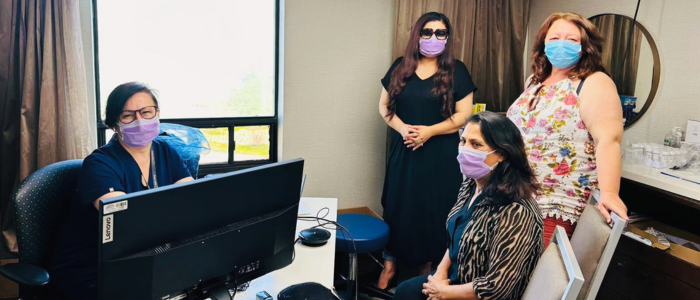
Ontario’s community health centres (CHCs) are at the forefront of bringing health‑care right into neighbourhoods. Their main goal is to make sure that people who usually face obstacles can get the medical help they need. Access Alliance Multicultural Community Health Centre focuses on newcomers: immigrants and refugees who have just arrived in Toronto.
This article provides Access Alliance’s, showing how complicated life can be for people starting over in a new country, how the centre tries to meet those challenges, and the tensions that arise when a single organization tries to serve a very mixed group of people.
Context
People who move to Canada come with very different backgrounds. Some are young, some are older; some have university degrees, others have trade skills; some speak perfect English, while many do not. Despite these differences, most share one pressing need: economic security.
When newcomers first arrive in Toronto, they run into a tangled web of barriers. The health‑care system is unfamiliar; language gaps make appointments hard to book, and housing is expensive and scarce. Many lose the professional status they held back home. Doctors become taxi drivers; engineers end up delivering pizza. Even though they may have a strong education, they often find themselves under‑employed, relying on food banks and living in cramped, substandard apartments.
Refugees face an added layer of difficulty. Many have fled war, persecution or dangerous journeys, carrying trauma that can lead to depression, post‑traumatic stress disorder, and survivor’s guilt. Cultural stigma around mental illness often stops them from seeking help, and the fact that almost half of Toronto’s yearly newcomer cohort does not speak English makes it even harder to navigate health, housing, education and legal services.
On top of personal struggles, there are systemic hurdles. Professional licences in Canada are tightly regulated. Newcomers can spend months or years trying to get their credentials recognized, often without success. During times of high unemployment, newcomers become targets of anti‑immigrant sentiment, blamed for taking jobs from long‑time residents. Funding for social‑service programs is unstable, with frequent cuts at municipal, provincial and federal levels, putting the future of specialised support services in jeopardy.
How Access Alliance responds
Access Alliance has built a multilingual team that can speak the languages of the communities they serve. They offer free interpreter services, conduct thorough assessments of each client’s health and social situation, and are ready to respond when emergencies arise. In 1999, Access Alliance quickly set up a special clinic for refugees rapidly airlifted from Kosovo, treating over a hundred patients in just four months.
The centre’s philosophy is that it must become a learning organization. Rather than sticking rigidly to a fixed plan, they constantly reflect on what works, experiment with new approaches, and adapt to the shifting needs of a diverse newcomer population. This mindset helps them keep their core mission alive even when resources are tight.
One key practice is comprehensive client assessment. By asking newcomers about everything that could affect their health, such as housing, income, language ability, mental‑wellbeing, staff can make appropriate referrals and follow‑up care. When clinicians share the language and cultural background of their patients, trust grows. Clients are more likely to attend appointments, share honest information, and stick with treatment plans. Trained cultural interpreters further bridge gaps, creating a comfortable space where newcomers feel heard.
Health‑promotion efforts are also tailored to cultural realities. For example, applying the Canadian Medical Association’s diabetes guidelines, originally designed for the general population, proved challenging. Access Alliance was able to show that educational materials and outreach strategies needed to be culturally appropriate, so they resonated with the dietary habits, beliefs and daily routines of various immigrant groups.
Balancing breadth and focus
As the centre has grown, it began offering services beyond core health care: legal aid, food‑bank referrals, housing workshops and other settlement supports. While these additions address important social determinants of health, they also risk pulling the organization away from its primary health‑care focus. This mission drift, with limited funding, can dilute impact and strain staff.
The authors of the original case study argue that staying clear about what the centre does best and continuously evaluating the value added to both the health sector and newcomer communities is essential. By partnering with other organizations, Access Alliance works to break down silos between health and settlement services, making it easier for newcomers to access the help they need in one place.
Lessons for the future
The experience of Access Alliance highlights several take‑aways for anyone working with immigrant and refugee populations:
- Language and culture matter. Multilingual staff and culturally safe care increase utilization and adherence.
- Holistic assessment is crucial. Understanding the full picture of a newcomer’s life enables effective referrals and follow‑up.
- Flexibility saves lives. Rapid‑response clinics can address sudden influxes of refugees or crises.
- Stay true to core strengths. Expanding services is valuable, but only when it doesn’t compromise the centre’s primary health‑care mission.
- Learn and adapt. Treating the organization itself as a learning entity allows continuous improvement despite funding volatility.
Even after years of effort, Access Alliance acknowledges that it has not yet fully achieved its mission of guaranteeing health care access for every immigrant and refugee. Yet the centre is stronger, more focused, and better prepared for the challenges ahead. Its story demonstrates how community health centres can act as bridges, linking newcomers to the health system, helping them overcome language and cultural barriers, and ultimately improving the wellbeing of both individuals and the broader Toronto community.
Authors: Sonja Nerad and Axelle Janczur.
Publication: Australian Journal of Primary Health-Interchange Vol. 6, No;. 3 & 4, 2000.